p

Friday, January 2, 2009

Super Car: 2010 Ford Shelby GT500 the King?

http://www.autounleashed.com/images/mustang_shelby_gt500kr.jpg
The 2010 Ford Shelby GT500 delivers the most power and refinement ever for a Mustang.

Ford's Special Vehicle Team used the gains made on the 40th anniversary edition Shelby GT500KR "King of the Road" Mustangs as the performance starting point and built from there. The design team, with a nod to the original Shelby Cobras from the 1960s, takes those design cues even further with nuanced improvements in both the coupe and convertible, each of which boasts a more-refined interior.

But, more importantly for a muscle car, the 2010 Shelby GT500 delivers more horsepower and more torque than the outgoing model, thanks in part to advancements pioneered on the GT500KR.

The 2010 Shelby GT500 is powered by a supercharged and intercooled 5.4-litre dual overhead cam V8 engine expected to produce 540 horsepower and 510 foot-pounds of torque. The redline is 6250 rpm. The car's aluminium power dome hood not only adds to the Shelby's appearance, it helps cool the engine through a hood extractor.

The Shelby's open-element air induction system features a conical air filter instead of a flat-panel closed system to reduce air restriction. This approach allows more air to be pumped through the engine, producing more power and increasing the engine's efficiency.

A cold-air intake feeds the coolest air possible directly into the air box, helping further increase horsepower. The intake necessitated moving the Cobra snake badge to the other side of the grille to enable maximum airflow.

The twin-disc clutch on the six-speed manual transmission has been significantly upgraded, improving drivability and NVH, while the car offers improved straight-line acceleration, plus fuel savings when cruising on the highway in the top gears.

The Shelby's distinct sounds will be apparent as always, though with new refinements, thanks to the work of the Noise, Vibration and Harshness (NVH) team. A resonator placed between the air filter and engine throttle body helps keep unwanted noise in check.

Driving dynamics also are improved, thanks to SVT's chassis tuning as well as new 19-inch Goodyear F1 Supercar tyres and forged aluminium wheels.

Spring and dampers have been optimised for better roll control, giving drivers more confidence when braking, accelerating or turning. The new chassis tuning takes its philosophy from the KR program, with a greater emphasis placed on primary body control.

The team also stiffened the steering shaft.

The 2010 Shelby GT500 features AdvanceTrac, Ford's stability control system with several options for performance. The default "on" mode accommodates every-day driving, and a Sport mode delivers for those wanting to put the Shelby GT500 through its paces on the track. The system also can be turned completely off, although the anti-lock brake system and other active safety systems remain in place. Standard safety equipment includes: dual stage front air bags, side-impact air bags and Ford's Personal Safety System.

More safety allows for more performance: numerous aerodynamic upgrades, including a redesigned splitter, were made to the front end. The design of the front fascia and the car's "flush" hood helps focus air flow. The top grille focuses air into the radiator, with a rubber flap inside the engine compartment helping to seal the system. The lower grille helps cool the intercooler. SVT engineers also went as far to block off specific diamonds in the front of the 2010 Shelby GT500's distinctive grille to help maintain the correct cooling and aerodynamic balance.

A meaner, reskinned snake

The design team took a cue from the Shelby AC Cobra 427 with respect to the front grilles, which are gaping and appear ready to swallow the road.

Another obvious difference for the Shelby is the addition of racing stripes, which made their mark on 1960s-era Ford performance vehicles,

Rounding out the Shelby's exterior modifications are the unique signature coiled Cobra badges on the front grille and front fenders, a more aggressive front splitter and lower-drag rear spoiler, which added to those improved aerodynamic features, round out the exterior modifications.

Inside there's genuine materials such as real leather in all seats, real aluminium on the instrument panel and Alcantara inserts on the seats and steering wheel.

The genuine aluminium finish panels have a unique-to-GT500 three-dimensional dimpled texture pattern inspired by racing clutch plates, braided hoses and cross-drilled racing brake rotors. The pattern has been tuned to compensate for the compound curvature of the instrument panels. In addition, the "GT500" logo has been discretely engraved into the aluminium in front of the passenger as a nod to classic Shelby Mustangs of the 1960s.

This unique aluminium finish panel is fully encapsulated by a soft seamless TPO (Thermoplastic Olefin) instrument panel with a shape that resonates with Mustang's heritage. The centre stack flows into the console and features a sub-flush shifter trim ring, flush cup holder door and lockable console stowage featuring the word "SHELBY" engraved in its Satin Liquid Chrome release button.

All 2010 Mustangs and Shelbys feature bright 360-degree rings surrounding the gauge cluster, uninterrupted by the steering column. These rings come in chrome for the Mustang and a Satin Liquid Chrome finish for the GT500. This finish is featured throughout the interior. An intricate cobra is etched into the centre of the aluminium steering wheel badge. The Shelby Cobra appears at startup on the navigation screen, and the familiar red "SVT" logo utilises new ambient lighting to illuminate the door scuffplate.

Even the classic white shift knob – an icon of Shelby Mustang DNA from years past – received special attention. First, it had to be the traditional white. It also had to be specific to the Shelby. The answer was to combine the racing-stripes theme with the traditional "H" pattern found on shifters to create a one-of-a-kind knob. Like the exterior, the racing stripes wrap from end to end, encircling the knob.


Tuesday, December 9, 2008

2009 Audi R8 Super car equipped with v10 engine

http://tbn3.google.com/images?q=tbn:qwc7rqp3Vzds6M:http://www.oneighturbo.com/wp-content/uploads/2008/01/usairways-2009audia4.jpgAUDI will release the newly unveiled V10 petrol-engined R8 in Australia by the end of next year.


No pricing details are available yet, although we can expect this car to cost considerably more than the $277,196 and $293,085 Audi charges for the existing six-speed manual and R-Tronic sequential manual 4.2 FSI V8 R8 versions respectively.


In Germany, the Audi R8 5.2 FSI quattro is priced from A$278,182 (142,400 Euros). The Volkswagen luxury marque is also keeping mum on when the long-awaited V10 diesel-powered version will be announced.


The ten-cylinder petrol R8 is powered by a 5.2-litre V10 engine featuring chain-driven quad camshafts, a wide cylinder angle of 90 degrees, a high-strength aluminium-alloy cast crankcase, dry sump lubrication and FSI direct fuel-injection, with the common-rail system injecting premium-unleaded petrol into the combustion chambers at up to 120 bar of pressure, according to Audi.


With a displacement of 5204cc, it delivers 386kW of power at a stratospheric 8000rpm and 530Nm of torque at 6500rpm. This compares to the 4.2 V8’s 309kW at 7800rpm and 430Nm at 4500-6000rpm. Driving all four wheels is a six-speed manual or R-Tronic sequential manual gearbox, as per the 4.2 V8 model.


Audi is proud that the R8 V10’s kerb weight of 1620kg is only 31kg more than its smaller-engined sibling, helping the mid-engined sports car flagship to rip to 100km/h sprint in a claimed 3.9 seconds.


http://tbn2.google.com/images?q=tbn:G4nuBEJzQEP2vM:http://newcarbuyingguide.com/images/articles/reviews/audi/2008AudiR801.jpgMeanwhile, the R-Tronic V10 is claimed to be capable of hitting 200km/h from standstill in 12 seconds, on its way to a 316km/h top speed. On the EU combined fuel consumption cycle, the V10 averages 13.7 litres per 100km. As with the R8 4.2 FSI, the V10 employs Audi’s Torsen differential quattro all-wheel drive running gear, while a 44 per cent front and 56 per cent axle load is described by the Ingolstadt-based firm as ideal.


Dual aluminium front and rear double wishbone suspension, Audi’s magnetic ride control, 380mm ventilated front/356mm ventilated rear disc brakes, and 10-spoke 235/35 front and 295/30 rear wheels and tyres are other R8 V10 technical highlights.


Audi is also offering a ceramic brake system that is said to be especially light at 9kg. Helping to distinguish the V10 from the regular V8 is a high-gloss black-painted finish for the front air inlets and apron lip; two instead of four cross-braces are fitted and the vanes in the grille are finished in chrome.


From the side, the ‘sideblades’ stand out more, the side sills are wider and the exhaust grilles at the rear windows have a matt aluminium look, while the engine that is clearly visible through the back window is marked as a V10 FSI unit.


All-LED headlights are on the standard features list, as are heated leather seats, GPS navigation, a Bang & Olufsen sound system, climate-control air-conditioning, an alarm and a trip computer.


Red rings decorate the instruments and gearshift knob, while the footrests and rocker switches of the R-Tronic gearbox are finished in aluminum.


Tuesday, November 18, 2008

Super Car: Tesla Roadster unveiled

http://www.crunchgear.com/wp-content/photos/tesla_roadster_on_the_road_2.jpghttp://stadium.weblogsinc.com/autoblog/videos/hirezpics/IMG_6866.jpghttp://www.momist.com/blog/uploaded_images/Tesla%20Roadster-724816.jpg


Tesla Motors unveiled their uber-chic Roadster, a powerful electric vehicle that looks, feels and drives like many other high-end sports cars Wednesday night. The main difference is the noise. Powered by a 3-phase, 4-pole AC induction motor, the Roadster can go 130 mph and does 0-60 in about 4 seconds, all completely silent.

Tonight was the grand unveiling of the Roadster in a decorated airport hangar in Santa Monica, CA. I don't ride in many sports cars, and I certainly have never been in one that zips across an airport's tarmac without so much as a whisper. But tonight I got a quick ride in the Roadster and all I could hear from the passenger's seat (not even Gov. Schwarzenegger, who flew in for a brief look at the car, was allowed to drive it) was wind noise. And myself saying "Wow" under my breath.

The car is low to the ground, and smooth in all possible ways. But this vehicle isn't just a sports car. It's also a green car. There are zero tailpipe emissions. There isn't even a tailpipe. Tesla Motors is working to provide purchasers with a photovoltaic panel that will turn the driving experience into an actual net producer of energy, according to Tesla Motors chairman Elon Musk.


Monday, November 17, 2008

Super Car: Porsche Boxster 2011

http://www.team-bhp.com/forum/iipcache/101549.jpg

With the first generation Porsche Boxster introduced in 1996 and second generation under the 987 platform designation in 2004, the third generation Boxster is due for launch in 2010 as a 2011 model. This time-line coincides with the recent announcement by Valmet Automotive Oy and Porsche AG to extend Boxster production in Finland until 2011.

Since the changes between the first and second generations were a modest warm-over, although Porsche claims only 20% of components were shared, the third generation is expected to be all-new with a more dramatic design while maintaining its core Boxster identity. Judging by the rendered interpretation above by Lars Saeltzer, the third generation Boxster will resemble Porsche's discontinued Carrera GT V10 supercar.

Monday, October 20, 2008

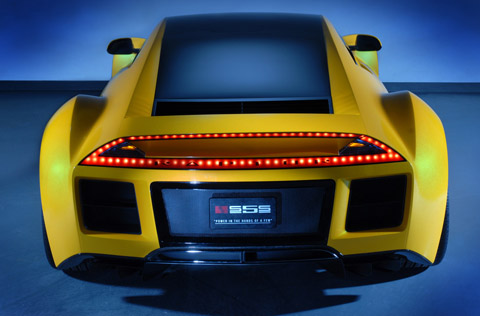
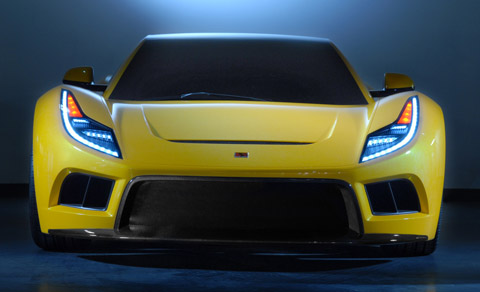
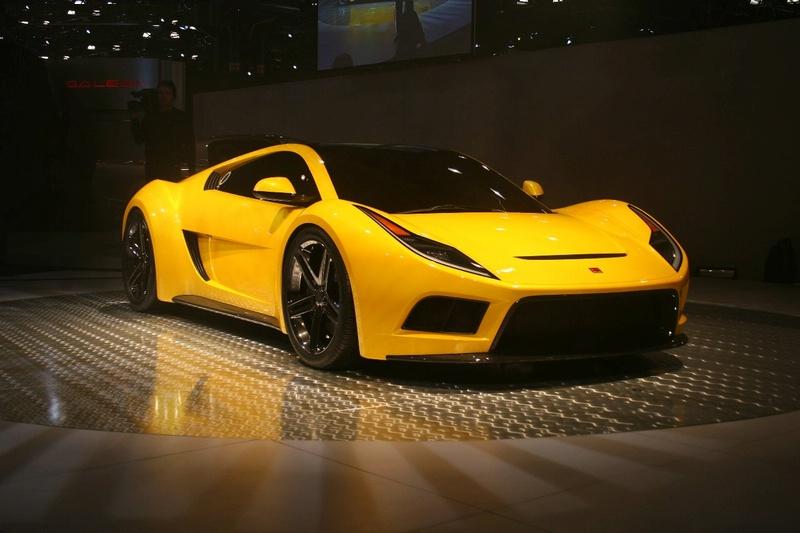
Saleen S5S Raptor Super Car Debut

http://graphics8.nytimes.com/images/2008/03/22/automobiles/600-saleen.jpghttp://www.thesupercars.org/wp-content/uploads/2008/03/saleen-s5s-raptor-concept-4.jpg
At a q
uick glance, you might think this car is Italian a Lamborghini perhaps, or even a Ferrari. This yellow supercar is all-American, however. The Saleen S5S Raptor made its world debut at the New York Auto Show, putting an exclamation point on the specialty manufacturer's recent reinvention of itself.

Considerably more restrained than Saleen's previous supercar the S7, the S5S Raptor features clean lines sculpted in lightweight composites. A solar-tinted glass roof allows daylight in, and the purposeful mid-engine design looks world-class.


Saleen's racing heritage is obvious at the S5S Raptor's heart, a new 5.0 liter supercharged V8. This 650-horsepower, 630 lb-ft torque engine runs on ethanol, just like the IRL and American Le Mans cars, and Saleen reports a 3.2-second 0-60mph time and a top speed of over 200mph. Saleen chose the ethanol burning engine partly as a nod to the track and partly to consider reduced emissions and oil dependence. The engine uses a twin-screw supercharger and is hooked up to a six-speed manual transmission. The Raptor is also designed to handle a paddle-shifted sequential gearbox, if desired.


Double wishbones are used at all four corners, and the massive fifteen-inch front, thirteen-inch rear brakes are augmented by ABS and traction control. The 20-inch forged aluminum wheels have a black diamond and carbon-fiber finish.


That's all very exciting, but it's all just bench talk until the rubber hits the road. Saleen says that the S5S Raptor could be on the road in two years at an estimated $185,000 MSRP, depending on the public's reaction to this car. Saleen seems to have thought this through, so it's a good bet that we'll see a roadgoing Raptor in the near future.

http://www.thesupercars.org/wp-content/uploads/2008/03/saleen-s5s-raptor-concept-2.jpg

http://autoworld.files.wordpress.com/2008/03/saleen_s5s_raptor.jpg


Friday, October 3, 2008

MC 1 Super Car is it possible??

http://longi.org/blog/wp-content/uploads/2008/01/mc1sc5.jpghttp://static.wallpaper.com/images/98_mc1_am21012008_f.jpg


The creators of the design hope to attract the eyes of Ferrari and Aston Martin buyers, this MC1 super car was first unveiled in Germany.


The popularity of Super Cars has increased dramatically over the last decade as personal wealth exploded, with a vehicle that can accelerate from zero to 100km/h in just around 3.0 seconds is not new to the Super Car Industry.


There is one thing that sets the MC1 Super Car apart from any other modern super car, it is the design time of this model. This V10 powered super car was fully designed under 3 months.


The makers wants to prove that super cars don't need years of development, but can be developed just in months.


Some are hesitating about the short turnaround time, and maybe it would change the face of auto industry, but until the production is possible and this car finds a handful of keen buyers,and is built and on the road to be expected by 2011, we will never now.

So is this car even possible to build?


They conducted a survey among their staffs and some like the design but others commented that “it is like a week old garbage”.


The vehicle will feature a mid mounted V10 engine that will output around 450 kilowatts(600hp), and with a light weight carbon fiber body shell it should be one of the fastest super cars ever built with gut wrenching acceleration.


It will have a 20 inch front and wider 21 inch rear wheel rims that is expected to reach around 320km/h (200mph).


The MC1 super car design also features a Lamborghini inspired vertical scissor doors, and measures just over 4.5 meters long, which is fairly short for a modern super car. Until this car is built then we will never know if this type of approach can change the super car industry.


Wednesday, October 1, 2008

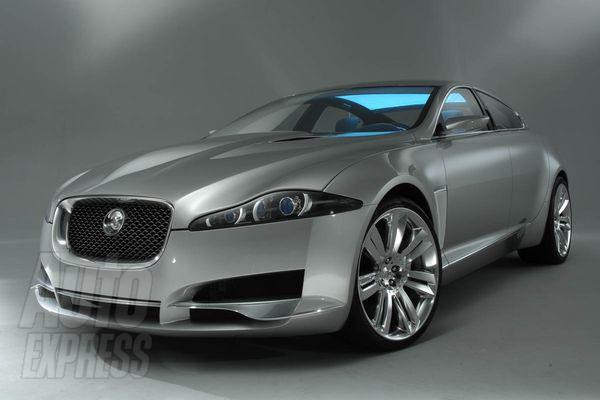
Super Car: Updates on the newest 2010 Jaguar XJ concept

2010 Jaguar XJhttp://www.autoexpress.co.uk/images/front_picture_library_UK/dir_460/car_photo_230274_5.jpghttp://www.autoexpress.co.uk/images/front_picture_library_UK/dir_460/car_photo_230280_5.jpg
2010 Jaguar XJ Hybrid Versionhttp://www.commutefaster.com/JaguarXJhybrid2009.jpg


This is an update version of the newest model of the 2010 Jaguar XJ, the wheelbase will remain virtually identical to the last model, so the improvements will come from mounting the rear seat to lower. All the Major updates will be made to the dashboard, with a facial modeled on the XF.


There will be a revised version of the 3.0 liter V6 and the top model R under the hood. It will be powered by a 500BHP 5.0 liter supercharged V8 engine. The Hybrid version of this car is also in the work. All engines are mated to Jaguar's latest six-speed box, all with complete steering wheel-mounted paddles. The 2010 Jaguar XJ will also have a new damping system similar to Audi's Magnetic ride.