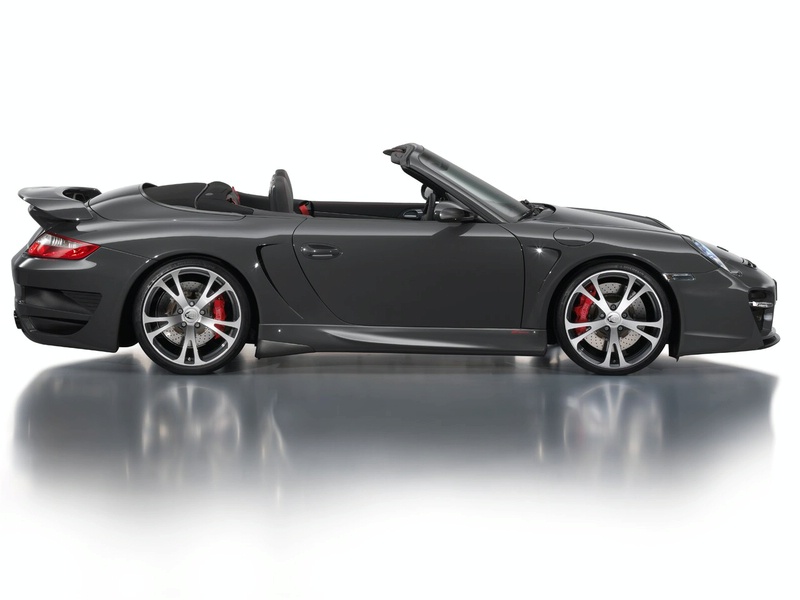
 August 7 - 2010 Porsche 911 Turbo The first entirely new engine in the 35-year-history of the Turbo comes with features such as Direct Fuel Injection and Porsche’s exclusive turbocharger with variable turbine geometry on a gasoline power unit. The engine achieves 500 hp while the car posts a remarkable fuel efficiency of over 24 mpg.
Saturday, August 8, 2009
2010 Porsche 911 Turbo Wallpaper
August 7 - 2010 Porsche 911 Turbo The first entirely new engine in the 35-year-history of the Turbo comes with features such as Direct Fuel Injection and Porsche’s exclusive turbocharger with variable turbine geometry on a gasoline power unit. The engine achieves 500 hp while the car posts a remarkable fuel efficiency of over 24 mpg.

Sunday, July 12, 2009
Super Car: 2010 Jaguar XJ concept Updates


Following the XF design theme, the XJ is completely restyled with the same styling from the 2007 Jaguar CX-F Concept. It shares the XF's range of direct gasoline injection engines, as well as its supercharged V8 producing 510 bhp. New to the range are plasma screen 'Virtual Instruments' and a 20-speaker Bowers & Wilkins sound system.
Press Release
Sleek, sporting and sophisticated, the all-new Jaguar XJ brings a daring new spirit to automotive luxury. It offers a seductive mix of striking design, breathtaking performance and engineering without compromise.
The new XJ is the epitome of fluid, contemporary automotive style. The elongated teardrop shape of the side windows establishes the car’s silhouette and lies at the heart of its flowing design. And the new XJ doesn’t just look streamlined: it shares a drag coefficient of 0.29 with the XF saloon, making them the most aerodynamic Jaguars ever.
A coupé profile cloaks a cabin that offers comparable levels of space to saloons with a more conventional style. There is generous accommodation for five occupants, while long-wheelbase models provide rear-seat passengers with even greater levels of comfort thanks to an additional 125mm of rear legroom.
The exquisitely designed interior has a strong sporting character throughout. A panoramic glass roof, standard on all models, dramatically enhances the sense of light and space inside the new XJ. And in keeping with its status as the ultimate four-door Jaguar, the XJ introduces a new generation of interior technologies, pioneering the use of display and infotainment systems such as the innovative Virtual Instrument dials and optional 1200W Bowers & Wilkins premium surround sound system.
At the heart of the all-new XJ’s construction is a next-generation application of Jaguar’s unique lightweight vehicle architecture. Primarily aluminium – but also utilising magnesium and composite alloys – it allows Jaguar to produce a significantly lighter and stiffer body – the lightest in its class. The new structure – which retains the same aerospace-based riveting and bonding processes – has been refined using these advanced new materials to deliver improved strength, enhanced refinement and superior safety performance.
The new XJ offers the choice of four powerful and refined engines, which use the latest powertrain technology to deliver an outstanding combination of performance and class-leading efficiency. The supremely powerful supercharged 510PS 5.0-litre AJ-V8 Gen III will head the line-up, with a 0-60mph time of 4.7 secs (0-100kph in 4.9 secs); 470PS supercharged and 385PS naturally aspirated petrol V8s are also available, dependent on market.
A no-compromise diesel alternative is provided by the formidable 275PS 3.0-litre AJ-V6D Gen III. With twin sequential turbochargers, this is an engine that delivers on every aspect of the Jaguar driving experience, marrying tremendous drive (0-60mph in 6.0 secs, 0-100kph in 6.4 secs) with impressive fuel economy and CO2 emissions (40.1mpg and 184g/km of CO2).
The all-new XJ delivers a driving experience that is just as memorable as the car’s appearance. Benefitting from technologies pioneered on the exciting new XFR and XKR models, including continuously variable damping (Adaptive Dynamics), electronically controlled rear differential (Active Differential Control) and a quick ratio power-steering system, the new XJ combines responsive, sporting dynamics with the refined, supple ride expected from a luxury Jaguar.
With its unique lightweight aluminium body structure and advanced new powertrains, the all-new XJ already has a head start when it comes to sustainable performance. The aluminium body uses more than 50 percent recycled material, with a plan to increase this to 75 percent. Body panels made from recycled material use only 5 percent of the energy required for new aluminium, equating to a potential saving of three tonnes of CO2 per vehicle.
“The new XJ is a thoroughly modern interpretation of the quintessential Jaguar. Its visual impact stems from the elongated teardrop shape of the car’s side windows, a powerful stance and wide track. It is the most emphatic statement yet of Jaguar’s new design direction.”
Wednesday, July 8, 2009
World’s Fastest Eco-Supercar the Frazer-Nash Namir


Hold your breath and fasten your seatbelt for the Frazer-Nash Namir’s intoxicating acceleration. The all-wheel drive hybrid features a 0.8-liter rotary engine that powers up four electric motors, one for each wheel. It speeds up to 187 mph at a 0-60 mph time of 3.7 seconds and a 1,200-mile range. The Frazer-Nash Namir tackled a hill climb at Goodwood, a perfect proof how the car’s technology brings out the best performance ever.
Tuesday, May 26, 2009
Super Car: Pagani Zonda R

While one certainly cannot say the Zonda F lacks performance figures, driving around the Nurburgring in 7:32 and achieving lateral G forces of almost 1.5 G, it is however a road car, easy to drive, intuitive and setting the benchmark for comfort, safety and lightweight. Paired with a quality finish and the attention to detail this made the Zonda F one of the most desirable supercars resulting in the 25 Coupe models being sold out in record time. This did not seem to fulfill the requirements of our most demanding customers, who adore the weekend drive on a racetrack.
The spark has been set by an Italo-American customer, enthusiast and already proud owner of 3 Zondas. He describes the project this way: “The thought has been on my mind for quite some time, but I am not interested in racing”.
The Zonda R is born with full liberty. The target: the ultimate performance at the racetrack without any implications of rules, except for safety, where no compromise is allowed. In September 2006 the first drawings were ready, but it was crucial to have the support of Mercedes-AMG for a high revving engine with a power output of 750 bhp, dry sump, light and with a low center of gravity. The basis was the self supporting engine of the mighty CLK GTR, which has dominated the GT championships.
Eve at constant racing pace the engine would have to cover over 3100 miles (5000 kilometers) before servicing.
The Zonda R is a car designed from scratch, with only 10% of the Zonda F components to be carried over. The suspension forged in Avional, a new Pagani six speed transversal sequential gearbox, carbon-fiber monocoque, aeronautical four pump fuel tank are only part of the equation.
The wheelbase has grown by 2 inches, the overall length by 5 inches and the track is increased by 2 inches. The bodywork and aerodynamics have been studied to offer maximum downforce. Even though built for the track, the project would not have received kick off, if the quality and finish of the car and its details was not up to the level of the Pagani road cars.
One of the first cars to be delivered however will be kept in a living room, designed by Pagani and built with the same materials as the Zonda F, beautifully textured carbon-fiber, avional, titanium, inconel and other state of the art materials. Additionally it will feature a bespoke HiFi System that will allow the customer to listen to the sound of this car at Le Mans and the Nurburgring.
The Pagani customers who have ordered the Zonda R will be relieved of almost $1,6 million + taxes.
The Track is its Home
This Zonda is purpose made for track use, without restrictions of any competition rules or homologation, with the only exclusion of the passengers’ integrity, where no compromise is tolerated.
A New Heart
The engine is built by the racing specialists at Mercedes AMG, where the championship winning DTM cars are born, as well as the CLK GTR, probably the most devastating and effective weapon ever to compete in the GT series. From it’s engine the Zonda R borrows the basic architecture including an ingenious dry sump allowing a low centre of gravity. This self-supporting engine with 750 bhp at 8000 rpm and 425 lb-ft of torque carries a lightweight carbon-fiber high-performance intake system, a racing multiple disc sintered clutch and Formula 1 style exhaust system, hydroformed in Inconel 625 and ceramic coated for optimal heat dissipation. The power unit combined with a 6 speed transversal manual sequential synchronized gearbox is designed to satisfy the most ambitious drivers.
The Chassis
The central carbon chassis will incorporate a roll cage and a rubber racing fuel tank with 4 fuel pumps and quick refuel filler like on GT race cars. The wheelbase has been increased by 2 inches to offer the best stability. The front and rear subframes are brand-new, built to accommodate a new suspension geometry, produced in avional. The magnesium forged rims with central wheel nut and a quick pneumatic lifting system allows fast and effortless changes of the slick tires.
Bodywork and Aerodynamics
The new bodywork has been honed to offer elevated downforce even in low speed corners. The longer front bonnet with flaps, closed underbody and the rear overhang with the adjustable rear wing and race derived diffuser translate into shattering aerodynamic efficiency and will let you experience cornering speeds beyond imagination. The car displays and logs information about the amount of dowforce that the car is generating at each moment. Combined with the adjustable wings you can easily find the best setup for each track.
Workstation
The interior is designed to accommodate the driver and passenger in bespoke seats, built to offer the best support, when the G-forces from the vehicle dynamics come into question. The Digitek instrumentation provides the essential information and a sophisticated telemetry allows through a variety of sensors to monitor every single component of the car.
source: supercarnews
Monday, March 9, 2009
Fastest Super Cars in the World
 SSC Ultimate Aero
Base manufacturer's suggested retail price: $654,400
Top Speed: 257 mph
Acceleration: 0-60 in 2.78 seconds
Horsepower: 1,183
Country of Origin: U.S.
 Bugatti Veyron
Base MSRP: $1.5 million
Top Speed: 253 mph
Acceleration: 0-60 in 2.5 seconds
Horsepower: 1,001
Country of Origin: France
 Koenigsegg CCX
Base MSRP: $695,000
Top Speed: 250 mph
Acceleration: 0-60 in 3.2 seconds
Horsepower: 806
Country of Origin: Sweden
 Saleen S7 Twin Turbo
Base MSRP: $555,000
Top Speed: 248 mph
Acceleration: 0-60 in 3.2 seconds
Horsepower: 750
Country of Origin: U.S.
 Bristol Fighter T
Base MSRP: $700,000
Top Speed: 225 mph
Acceleration: 0-60 in 3.5 seconds
Horsepower: 1,012
Country of Origin: U.K.
 Pagani Zonda F
Base MSRP: $741,000
Top Speed: 215 mph
Acceleration: 0-60 in 3.5 seconds
Horsepower: 549
Country of Origin: Italy
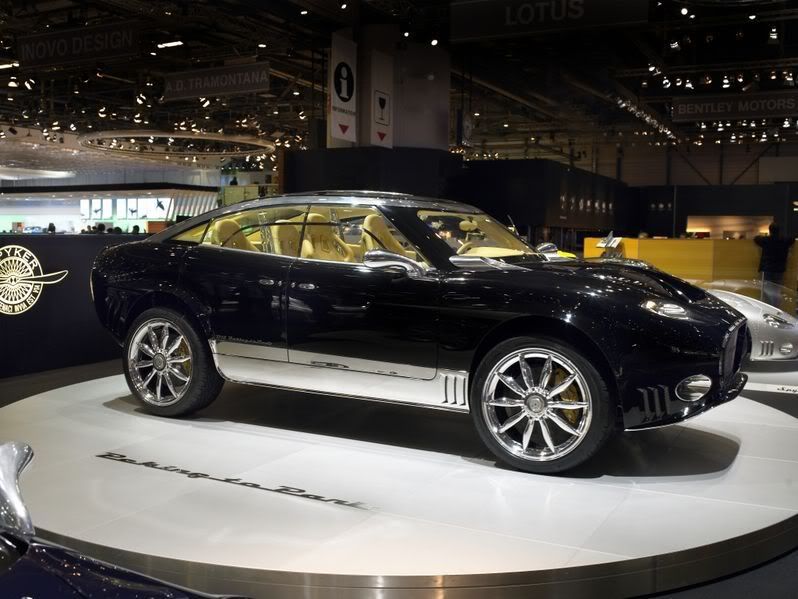 Spyker C8 Double 12 S
Base MSRP: $325,560
Top Speed: 215 mph
Acceleration: 0-60 in 3.5 seconds
Horsepower: 400
Country of Origin: Netherlands
 Lamborghini Murciélago LP640
Base MSRP: $430,000
Top Speed: 213 mph
Acceleration: 0-60 in 3.3 seconds
Horsepower: 660
Country of Origin: Italy
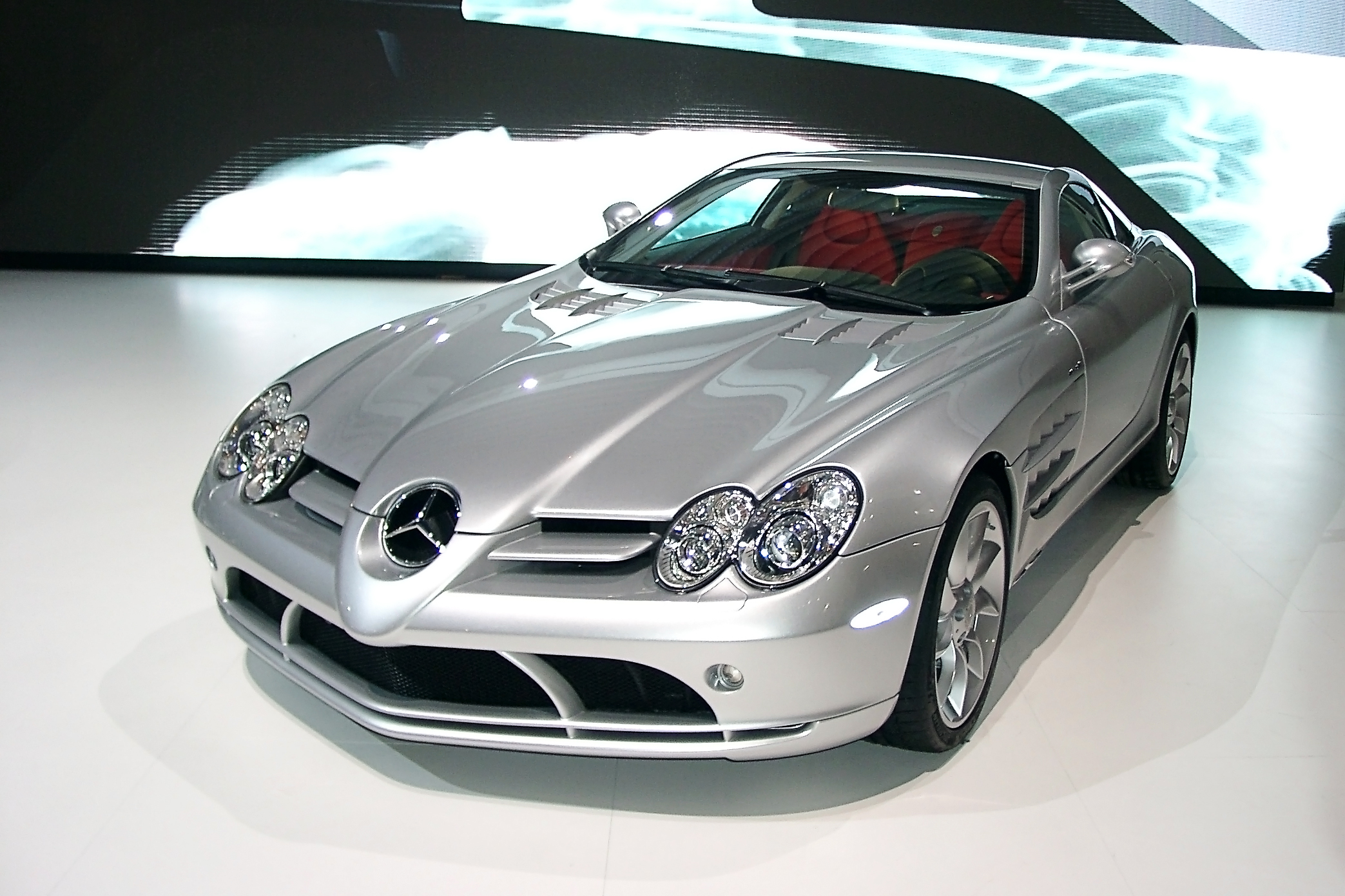 McLaren Mercedes SLR
Base MSRP: $497,750
Top Speed: 206 mph
Acceleration: 0-60 in 3.8 seconds
Horsepower: 617
Country of Origin: England
 Silva GT3
Base MSRP: $75,000
Top Speed: 205 mph
Acceleration: 0-60 in 3.7 seconds
Horsepower: 530
Country of Origin: U.S.
Monday, February 9, 2009
Super Car: 2009 G-Power G4 BMW Z4


300 km/h top speed, 0-100 km/h in just 4,9 seconds, 375 hp and an engine’s peak torque of 420 NM: These are the characteristics of the latest G-POWER development for the BMW Z4 3.0i.
In addition to the increase in power output of 144 hp for the 6- cylinder engine, that normally produces 231 hp, the G-POWER offers a complete tuning program for the Bavarian roadster consisting of: Aerodynamic body kit, light-alloy wheels, suspension modifications, high-performance brake system and exclusive interior components.
G-POWER offers superchargers system for increased power output looking back on 25 years of experience in tuning BMW automobiles. The new G-POWER EVO III supercharger system is an evolution, based on the well known systems for the Z4 2,2 to 3,0 l six- cylinder engines of the BMW Z4. Its core is an ASA T1-12 supercharger from the all new “black-line” edition that features ceramic ball bearings for an increased rpm limit of the charger. Accordingly the boost rises to a higher pick of 0,6 bar rel. , which is cooled down by a large air-to-air inter cooler and controlled by an Dual Flow bypass system. To keep the oil temperatures at level the G-POWER EVO III system is equipped with a thermostat controlled oil cooler, that prevents the ASA supercharger from overheating. On the exhaust side the G-POWER EVO III system features a complete exhaust system with racing-headers and catalysts. This measure optimizes power yield, throttle response and also ensures the engine’s thermal health. Specially developed mapping for engine electronics coordinate the perfect interaction of all new components.
The results of the G-POWER treatment are impressive: With 375 hp at 6.450 rpm and 420 NM torque at 4.650 rpm the standard 231 hp strong BMW Z4 3.0i becomes a true eliminator. With a sprint time from rest to 100 km/h of 4.9 seconds and to 200 km/h in 15,1 seconds the G-POWER G4 is at level with the BMW Z4M and finally outruns it with a top speed of 300-km/h. The conversion of the standard engine to the G-POWER EVO III configuration is 18,850,00 Euro including the installation; which can only be done at our headquarters’ workshop in Autenzell Bavaria.
The enormous performance places extreme demands on aerodynamics, tires, suspension and brakes. The G-POWER front apron replaces the production part in its entirety. Its large air inlets provide optimal supply of cooling air for the high performance air-to-air inter cooler. At the same time the spoiler minimizes lift on the front axle at high speeds. The G-POWER rocker panels smooth the airflow between the wheel houses and give the Z4 a longer, lower and sleeker appearance. Lift on the rear axle is reduced by the G-POWER rear apron, that features the needed openings for the 4 pipe G-POWER rear muffler.
The G-POWER Silver stone 20-inch light-alloy wheels that fill out the space beneath the wheel arches perfectly, underline the distinctive new look of the G-POWER equipped BMW Z4, are mounted in sizes 9.0 J x 20 with size 245/30 ZR 20 tires in front and size 10.0 J x 20 wheels with size 285/25 ZR 20 tires on the rear axle.
The large wheels make room for the G-POWER high-performance brake system with eight-piston fixed calipers and 380 x 34 millimeter brake discs on the front axle. The Z4 handling can be made even sportier by installing the height-adjustable G-POWER coil-over suspension RS with nine selectable settings each for bound and rebound.
The G-POWER EVO III supercharger system is available for all BMW Z4 3.0i with manual transmission, along with the numerous items from the extensive G-POWER tuning accessories lineup.
Friday, January 2, 2009
Super Car: 2010 Ford Shelby GT500 the King?

The 2010 Ford Shelby GT500 delivers the most power and refinement ever for a Mustang.
Ford's Special Vehicle Team used the gains made on the 40th anniversary edition Shelby GT500KR "King of the Road" Mustangs as the performance starting point and built from there. The design team, with a nod to the original Shelby Cobras from the 1960s, takes those design cues even further with nuanced improvements in both the coupe and convertible, each of which boasts a more-refined interior.
But, more importantly for a muscle car, the 2010 Shelby GT500 delivers more horsepower and more torque than the outgoing model, thanks in part to advancements pioneered on the GT500KR.
The 2010 Shelby GT500 is powered by a supercharged and intercooled 5.4-litre dual overhead cam V8 engine expected to produce 540 horsepower and 510 foot-pounds of torque. The redline is 6250 rpm. The car's aluminium power dome hood not only adds to the Shelby's appearance, it helps cool the engine through a hood extractor.
The Shelby's open-element air induction system features a conical air filter instead of a flat-panel closed system to reduce air restriction. This approach allows more air to be pumped through the engine, producing more power and increasing the engine's efficiency.
A cold-air intake feeds the coolest air possible directly into the air box, helping further increase horsepower. The intake necessitated moving the Cobra snake badge to the other side of the grille to enable maximum airflow.
The twin-disc clutch on the six-speed manual transmission has been significantly upgraded, improving drivability and NVH, while the car offers improved straight-line acceleration, plus fuel savings when cruising on the highway in the top gears.
The Shelby's distinct sounds will be apparent as always, though with new refinements, thanks to the work of the Noise, Vibration and Harshness (NVH) team. A resonator placed between the air filter and engine throttle body helps keep unwanted noise in check.
Driving dynamics also are improved, thanks to SVT's chassis tuning as well as new 19-inch Goodyear F1 Supercar tyres and forged aluminium wheels.
Spring and dampers have been optimised for better roll control, giving drivers more confidence when braking, accelerating or turning. The new chassis tuning takes its philosophy from the KR program, with a greater emphasis placed on primary body control.
The team also stiffened the steering shaft.
The 2010 Shelby GT500 features AdvanceTrac, Ford's stability control system with several options for performance. The default "on" mode accommodates every-day driving, and a Sport mode delivers for those wanting to put the Shelby GT500 through its paces on the track. The system also can be turned completely off, although the anti-lock brake system and other active safety systems remain in place. Standard safety equipment includes: dual stage front air bags, side-impact air bags and Ford's Personal Safety System.
More safety allows for more performance: numerous aerodynamic upgrades, including a redesigned splitter, were made to the front end. The design of the front fascia and the car's "flush" hood helps focus air flow. The top grille focuses air into the radiator, with a rubber flap inside the engine compartment helping to seal the system. The lower grille helps cool the intercooler. SVT engineers also went as far to block off specific diamonds in the front of the 2010 Shelby GT500's distinctive grille to help maintain the correct cooling and aerodynamic balance.
A meaner, reskinned snake
The design team took a cue from the Shelby AC Cobra 427 with respect to the front grilles, which are gaping and appear ready to swallow the road.
Another obvious difference for the Shelby is the addition of racing stripes, which made their mark on 1960s-era Ford performance vehicles,
Rounding out the Shelby's exterior modifications are the unique signature coiled Cobra badges on the front grille and front fenders, a more aggressive front splitter and lower-drag rear spoiler, which added to those improved aerodynamic features, round out the exterior modifications.
Inside there's genuine materials such as real leather in all seats, real aluminium on the instrument panel and Alcantara inserts on the seats and steering wheel.
The genuine aluminium finish panels have a unique-to-GT500 three-dimensional dimpled texture pattern inspired by racing clutch plates, braided hoses and cross-drilled racing brake rotors. The pattern has been tuned to compensate for the compound curvature of the instrument panels. In addition, the "GT500" logo has been discretely engraved into the aluminium in front of the passenger as a nod to classic Shelby Mustangs of the 1960s.
This unique aluminium finish panel is fully encapsulated by a soft seamless TPO (Thermoplastic Olefin) instrument panel with a shape that resonates with Mustang's heritage. The centre stack flows into the console and features a sub-flush shifter trim ring, flush cup holder door and lockable console stowage featuring the word "SHELBY" engraved in its Satin Liquid Chrome release button.
All 2010 Mustangs and Shelbys feature bright 360-degree rings surrounding the gauge cluster, uninterrupted by the steering column. These rings come in chrome for the Mustang and a Satin Liquid Chrome finish for the GT500. This finish is featured throughout the interior. An intricate cobra is etched into the centre of the aluminium steering wheel badge. The Shelby Cobra appears at startup on the navigation screen, and the familiar red "SVT" logo utilises new ambient lighting to illuminate the door scuffplate.
Even the classic white shift knob – an icon of Shelby Mustang DNA from years past – received special attention. First, it had to be the traditional white. It also had to be specific to the Shelby. The answer was to combine the racing-stripes theme with the traditional "H" pattern found on shifters to create a one-of-a-kind knob. Like the exterior, the racing stripes wrap from end to end, encircling the knob.
Subscribe to:
Posts (Atom)
