p

Wednesday, January 6, 2010

Supercar: 2011 Tesla Model S Pre-Production

http://sickofoil.com/wp-content/uploads/2009/08/tesla-model-s-2011-730138.jpghttp://www.themotorreport.com.au/wp-content/uploads/2008/writer/TeslaModelSPhotosLeakedAheadOfDebut_6893/tesla_models_03.jpghttp://www.seriouswheels.com/pics-2011/r-z-0-9/2011-Tesla-Model-S-Front-1280x960.jpg
The Model S, which carries its charger onboard, can be recharged from any 120V, 240V or 480V outlet, with the latter taking only 45 minutes. By recharging their car while they stop for a meal, drivers can go from LA to New York in approximately the same time as a gasoline car. Moreover, the floor-mounted battery pack is designed to be changed out in less time than it takes to fill a gas tank, allowing for the possibility of battery-pack swap stations.

The floor-mounted powertrain also results in unparalleled cargo room and versatility, as the volume under the front hood becomes a second trunk. Combining that with a four-bar linkage hatchback rear trunk and flat folding rear seats, the Model S can accommodate a 50-inch television, mountain bike *and* surfboard simultaneously. This packaging efficiency gives the Model S more trunk space than any other sedan on the market and more than most SUVs.

"Model S doesn't compromise on performance, efficiency or utility -- it's truly the only car you need," said Tesla CEO, Chairman and Product Architect Elon Musk. "Tesla is relentlessly driving down the cost of electric vehicle technology, and this is just the first of many mainstream cars we're developing."

Tesla expects to start Model S production in late 2011. The company believes it is close to receiving $350 million in federal loans to build the Model S assembly plant in California from the Dept of Energy's Advanced Technology Vehicle Manufacturing Program.

Tesla is the only production automaker already selling highway-capable EVs in North America or Europe. With 0-60 mph in 3.9 seconds, the Roadster outperforms almost all sports cars
in its class yet is six times as energy efficient as gas guzzlers and delivers 244 miles per charge. Tesla has delivered nearly 300 Roadsters, and nearly 1,000 more customers are on the wait list.

Teslas do not require routine oil changes, and they have far fewer moving (and breakable) parts than internal combustion engine vehicles. They qualify for federal and state tax credits, rebates, sales tax exemptions, free parking, commuter-lane passes and other perks. Model S costs roughly $5 to drive 230 miles - a bargain even if gasoline were $1 per gallon.

The anticipated base price of the Model S is $49,900 after a federal tax credit of $7,500. The company has not released options pricing. Three battery pack choices will offer a range of 160, 230 or 300 miles per charge.

"Model S costs half as much as a Roadster, and it's a better value than much cheaper cars," Musk said. "The ownership cost of Model S, if you were to lease and then account for the much lower cost of electricity vs. gasoline at a likely future cost of $4 per gallon, is similar to a gasoline car with a sticker price of about $35,000. I'm positive this car will be the preferred choice of savvy consumers."

The standard Model S does 0-60 mph in under six seconds and will have an electronically limited top speed of 130 mph, with sport versions expected to achieve 0-60 mph acceleration well below five seconds. A single-speed gearbox delivers effortless acceleration and responsive handling. A 17-inch touchscreen with in-car 3G connectivity allows passengers to listen to Pandora Radio or consult Google Maps, or check their state of charge remotely from their iPhone or laptop.

Tesla is taking reservations online and at showrooms in California. Tesla will open a store in Chicago this spring and plans to open stores in London, New York, Miami, Seattle, Washington DC and Munich later this year.

Friday, January 1, 2010

Super Car: Ferrari Gas-Electric Supercar

Ferrari is now going to launch their new gas-electric supercar. They have super that could be arriving through early spring along with the latest reports.

This coming spring they will launch their latest reports along with Italy’s “Quattroroute Magazine” which will showcase this great release. The new decade is going to be all about advanced and high power environmentally friendly cars. 2010 will thus see the hybrid base on 588 GTB Fiorano.

This is going to be a new setting that will be rumored to make for Geneva auto show next March. There is going to be overall 35% improvement in fuel economy facilitation. The new gas fuel Ferrari is going to bring some great aspirations and desires with overall great features. This is focused on keeping an environmental balance with work.

There are going to be improved handling along with the greater plan for the launch of a hybrid drivetrain. The successor to the presently talked about car would be the drivetrain. It has been called the 612 Scaglietti with all the improved handling along with its planned launch in 2014.

http://www.pyroradio.com/images/uploaded/2010_ferrari_458_italia_small_2-0728-630x360.jpg

Wednesday, December 30, 2009

Super Car: 2010 Zenvo ST1

The Zenvo ST1 is designed to express the excessive power and performance of the car.
The design brief from the Zenvo creators to the designers at hermann & brandt design consultancy was to design a supercar that looked like no other supercar. The design had to be aggressive mixing supercar styling with race car elements.

The design of the Zenvo ST1 is made from free flowing accelerating lines creating the shape of the wheel arches, the roof line, side line and the lower side air intake. The sharp lines are connected by muscular organic surfacing creating dramatic reflections. Contrasting the general surfacing the design features a race car inspired lower carbon splitter.

The front of the Zenvo ST1 is designed around the hexagonal trademark Zenvo grille flanked by the large front air intakes used for brakes and engine cooling. The intakes are raked back to minimize drag and at the same time making the side impression of the car more compact.

The theme of the front is repeated in the rear which is designed around the big diffuser necessary for high speed stability. As on the front the center volume is flanked by large air exits extracting hot engine air as well as housing the exhaust and rear lights.

The rear spoiler mandatory for a car capable of extreme high speeds is partly integrated in the rear wing. It has a unique aerodynamic design following the raked shape of the rear end.

http://cdn-www.rsportscars.com/images/zenvo/2010-zenvo-st1/2010-zenvo-st1-on-road-overview.jpg

Tuesday, December 1, 2009

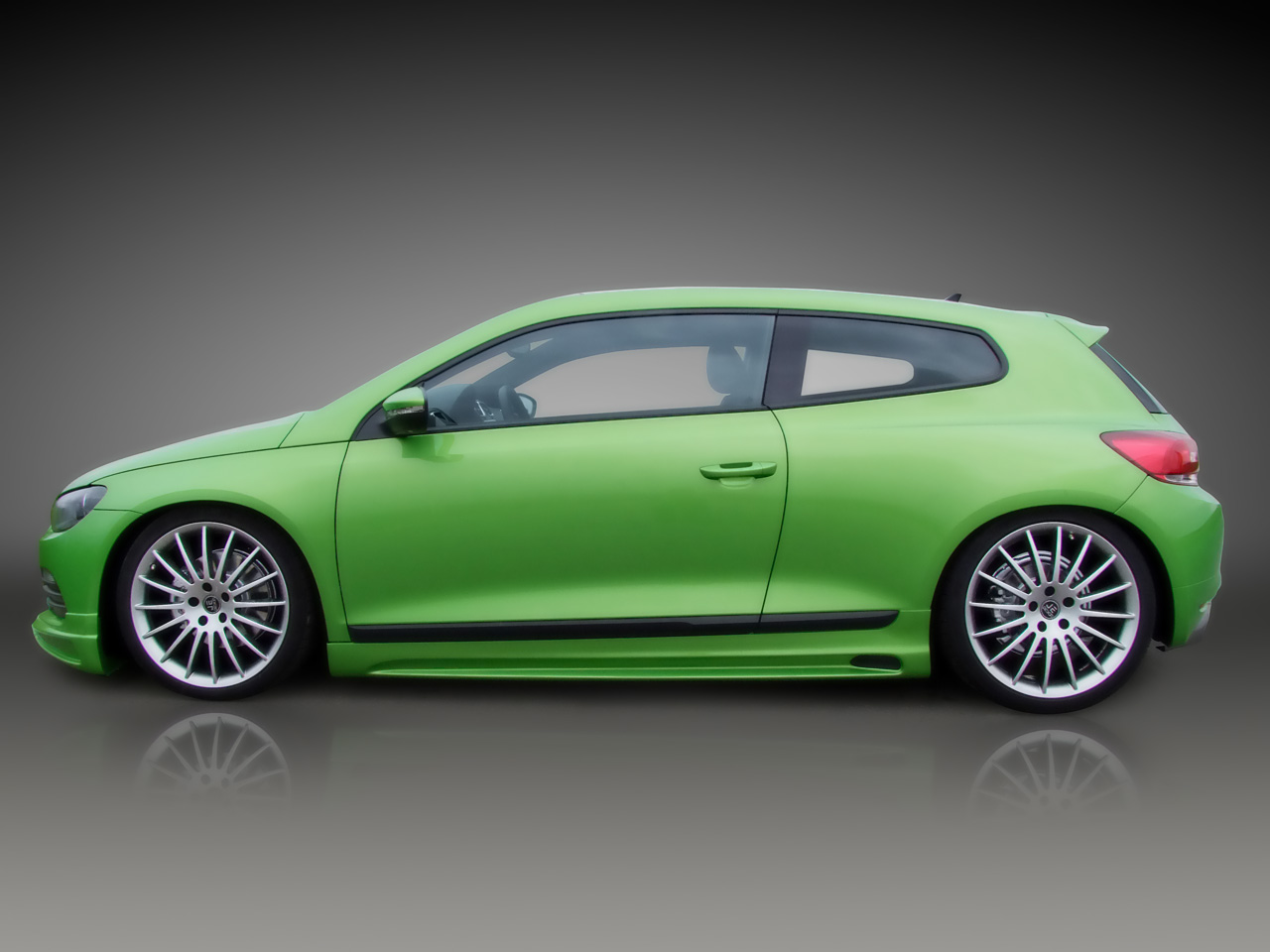
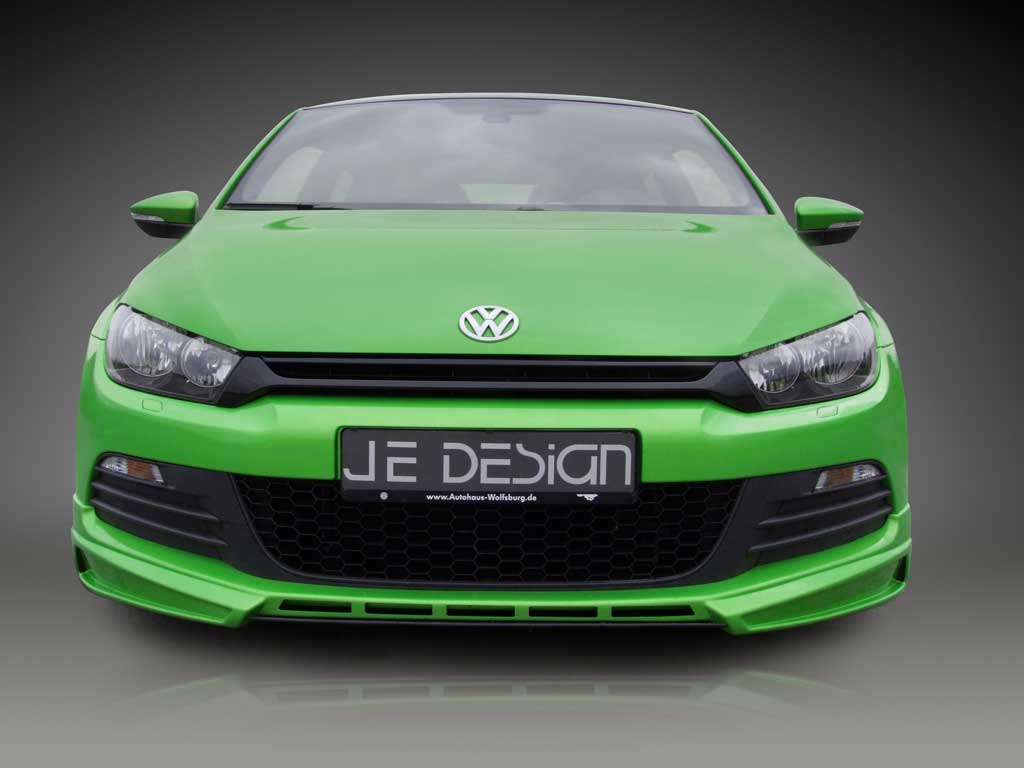
Super Car: 2010 JE Design Volkswagen Scirocco

http://www.thesupercars.org/wp-content/uploads/2009/08/2010-JE-Design-Volkswagen-Scirocco1.jpghttp://www.zercustoms.com/news/images/Volkswagen/JE-DESIGN-Volkswagen-Scirocco-20-TDI-3.jpg


JE DESIGN lashes on the Diesel: Entire sport programme for the VW Scirocco

-- Performance of the TDI rises to 205 hp
-- Entire body kit and lowering guarantee sport appearance
-- Complete wheel set in 19 inches and two finishes

The times of shaky oil burners are over. But the diesel engine still has a rather stale image. Now JE DESIGN is taking on this prejudice.

The refiner located in Leingarten, Germany enhances the performance of the already agile turbo diesel in the VW Scirocco with an additional control unit by more than twenty-five percent from 140 hp (103 kW) to 180 hp (133 kW). Also the maximum torque increases from 320 to 400 Newton metres at 1,750 to 2,500 r.p.m. respectively. The maximum speed thereby rises from 207 km/h to 213 km/h, and the acceleration from zero to hundred is reduced by 0.9 seconds to 8.4 seconds.

Also for the new 2.0 TDI CR, JE DESIGN offers a performance enhancement of 170 hp (125 kW) to 205 hp (171 kW). With that, the Scirocco then renders a top speed of 229 km/h (serial model: 222 km/h) and accelerates from zero to hundred in 7.1 seconds (serial model: 7.8 seconds). The torque rises to 410 Newton metres (serial model: 350 Nm).

JE DESIGN offers the entire performance pack with assembly for 1,249 euros (180 hp) and 1,449 euros (205 hp) including VAT and adds a 12-month warranty.

In order to adjust the appearance to the newly gained power, JE DESIGN has created an entire body kit. The refiner produces these parts in the usual OEM-quality made of high-quality ABS (Acrylonitrile butadiene styrene). The CNC-milled material ensures a low weight, perfect fitting accuracy and at the same time, the highest material stability.

The kit for 919 euros including VAT includes a front spoiler with a centre sword in carbon look which already renders a racy glance when the car is still parked. The side skirts with air inlets and a rear skirt attachment which is perfectly adjusted to the other component parts and which is also available in carbon-look renders a powerful profile. A refining kit for gull-wing doors (1,549 euros) completes the body modification.

The muffler made of stainless steel with two central oval end pipes (899 euros) renders an earthy sound and an impressive appearance. The muffler comes with an EU-operating license. The lowering springs (299 euros) which were especially designed for the VW Scirocco, lower the car by 30 millimetres and are combined with serial shock absorbers. In order to fill the wheelhouses adequately, JE DESIGN offers the elegant wheel design Multispoke as a complete wheel set. The wheels are available in the size 8x19 inches in shadow silver (2,810 euros), or graphite matt / with polished edges (2,930 euros), both with 235/35 R 19 tyres.

Monday, October 26, 2009

Super Car: 2010 Lexus LFA

http://3.bp.blogspot.com/_FoXyvaPSnVk/Srl_dm8tXCI/AAAAAAACFH8/_Ll6yQ37o8g/s800/2010-Lexus-LF-A-V10-0.jpghttp://image.internetautoguide.com/f/auto-news/2010-lexus-lf-a-supercar-spied-before-the-2009-tokyo-auto-show-first-look/26197474+cr1+re0+ar1/2010-lexus-lf-a-supercar-spy-shots.jpg
With a fairly long and public development period, the Lexus LFA debuted at the Tokyo Motor Show in 2009. It trailed a series of concepts released at the North American International Auto Show (NAIAS) which became more refined with each model. The first concept, the LF-A, was shown in 2005 and laid out the basic design which included a front/mid-mounted V10 powering the rear wheels, a carbon fiber chassis and a rear-mounted transaxle.

The entire project began in 2000 when Haruhiko Tanahashi was given the green light to design a world class supercar from the bottom up. His research would lead him to carbon-fiber reinforced plastic which makes up the bulk of the LFA. As early as 2004, prototypes internally labeled P280 began testing on the Nürburgring. More extensive testing was done in Germany in 2006 and many long-term issues were discovered at the racetrack including reliability and durability issues. Even after six years, the engineers were unhappy with their results and took the car back to Japan for modifications.

In 2008, Lexus decided to openly race their matte-black prototype at the Nürburgring 4 hour VLN endurance race. Really nothing more than a development exercise with minimum safety modifications, they finished 77th overall and won the SP8 class. Later that year an LF-A was entered in the 24-hours of Nürburgring and finished 121st overall, finishing at the back of the pack in SP8 class. In 2009, two prototypes were prepared and run with proper livery for team Gazoo Racing. Only one car finished the race in 87th overall and 4th in its class.

At the 2009 Tokyo Motor Show, Lexus officially presented the LF-A to the international press and displayed a pre-production prototype that was close to final specification. At that time they announced production was limited to 500 units with only 20 cars being completed per month at their factory in Toyota, Japan.

The car can be easily compared to Lamborghini Gallardo, Ferrari F458 and Aston Martin DB9. Like these cars, the LF-A was designed from the onset with racecar engineering. The chassis is a one-piece, carbon-fiber tub that has removable front and rear aluminum subframes that support the driveline, bumpers, and fenders. These are important for maintenance since they can be replaced to repair accident damage.

Called the 1LR-GEU, the new V10 has a narrow angle of º72. To reduce size, the unit has dry-sump lubrication which force feeds oil from a separate reservoir. Lexus says this new engine has the same dimensions as their V6. Furthermore, the aluminum block has a fully integrated crankcase and the intake includes individual throttle bodies. The unit is mounted very far back in the engine bay to achieve a 48:52 front to rear weight balance.

Power is sent from this engine via a rigid torque tube to a 6-speed sequential. Called ASG, Lexus uses an electrohydraulic system which shifts in 200ms.

Several safety systems prevent excessive oversteer in the LFA. A computer call VDIM coordinates several. One of the primary systems is VSC which detects speed, slip, yaw to direct the car towards the driver's steering angle. The system limits engine output and uses selective braking. Basic traction control is offered on the rear wheels with a system called TRAC/TRC.

Press Release

Tokyo, October 21, 2009 - Lexus announces today the official launch of the LFA, a two-seat supercar scheduled to go into production at the end of 2010 as the pinnacle of the Lexus "F" premium sports car series. Pre-sales start today.

Ultra-responsive and extremely stable even when taken to the edge, the LFA creates a sense of reassurance that opens up a new world of driving emotion, exhilarating the senses to move the driver in more ways than one.

The LFA combines high output, superb chassis design and meticulous aerodynamics to achieve instantaneous total-vehicle response characterized by high-rev, seamless acceleration echoed by a self-defining resonance from its 4.8-liter V10.

Only 500 units of the LFA are to be produced and sold worldwide.

A prototype of the LFA is now on display at the 41st Tokyo Motor Show, which is open to the general public from October 24 to November 4 at Makuhari Messe in Makuhari, Chiba Prefecture.

Strong and light

The newly developed 4.8-liter V10 engine boasts exceptional power, while lightweight materials (aluminum alloy, magnesium alloy and titanium alloy) and a very compact size (smaller than a conventional V8) allows for optimal weight distribution and an exceptional power-to-weight ratio.

Carbon fiber reinforced plastic (CFRP) cabin enhances high body-rigidity and reduces weight. This unique cabin is 100kg lighter than a comparable aluminum cabin. Detailed analysis and precise matching of CFRP materials allows for high rigidity and low weight. LFA CFRP production technology, including unique CFRP-to-metal joining, was completely developed by Lexus.

Balanced

Relatively higher weight components such as the engine and transmission are placed within the wheelbase. A low center of gravity is made possible by the use of dry sump lubrication1, along with placing peripheral components (oil pump, water pump) behind the engine. Furthermore, optimal placement of the transmission and the fuel tank in front of the rear axle adds to this application of centralized mass. This minimizes weight shift during cornering and contributes to outstanding performance and stability. Lighter weight components, like the radiator and electric fans, are placed behind the rear axle.

Combined with a front-engine and rear-wheel-drive configuration, the short, wide and low body allows the LFA to achieve its target front-to-rear weight distribution of 48:52.

Driver-centered

The driver's seat is positioned near the LFA's center of gravity. The centralized seating concept (with the seat between the front and rear axles and closer to the left–right center) is made possible by the use of a rear transaxle and vertically stacked torque tube and exhaust pipes reducing the width of the center tunnel. The driver placement is aimed to provide maximum car-to-driver feedback, especially under sport or high G-force driving conditions.

V10 Engine

Titanium valves, ultra–light weight rocker arms with a diamond–like coating and a fully integrated lower crankcase that reduces pumping losses at high RPMs combine to provide the driver with overwhelming acceleration right up to the 9,000rpm redline. The LFA's purpose-built V10 delivers 90% of its peak torque between 3,700rpm and 9,000rpm.

Precise Response

Independent, electronically controlled throttle bodies ensure precise air-feed to each of the 10 cylinders, enabling immediate engine response from the accelerator pedal. The engine response time is approximately half the normal response time of a single-throttle valve.

The six-speed ASG transmission features heavy-duty synchronizer rings and a newly developed gearshift actuator, providing the driver with a very direct shift feel. Four selectable driving modes and a seven-stage shift-speed selector that results in upshift speeds down to 0.2 seconds provide a higher level of driver control.

Track-sized high-performance (Carbon Ceramic) CCM brake discs and Electronically Controlled Braking system generate ultra-powerful yet stable braking.

Handling and Dynamics

The very light and rigid CFRP cabin, combined with a front double-wishbone suspension and a rear multilink suspension, result in a very stable, controlled ride. Detailed aerodynamic engineering results in elements such as a flat underbody, a diffuser and a speed-controlled rear wing, which allows precise vehicle response at all vehicle speeds, thus creating unity between driver and machine.

Vehicle Dynamics Integrated Management integrates numerous vehicle dynamic functions that provide a high level of vehicle stability and preventative safety without interfering with the driver's intentions, especially when sport driving.

Exciting engine sound and L-finesse2 design
Equal-length exhaust manifolds combined with an equal-length dual exhaust system routed through a multistage titanium main muffler fine tunes the exhaust note.

An acoustically tuned surge tank linked to 10 individual throttle bodies creates a powerful induction sound. The coordination of intake and exhaust sounds overlap at various RPMs to create a unique, exciting and inspired soundtrack.

The exterior design includes carefully tuned aerodynamics and airflow management. The use of CFRP, in addition to strength and weight advantages, frees up the design of the exterior panels allowing a fresh supercar L-finesse design. The interior design combines state-of-the-art instrument-panel design and technology, along with a variety of custom-tailored interior trim packages to suit the most discerning driver.

Monday, October 5, 2009

Super Car: TechArt 911 Turbo Cabriolet

http://www.seriouswheels.com/pics-2008/r-z-0-9/2008-TechArt-Porsche-911-Turbo-Cabriolet-Front-1280x960.jpg
http://www.egmcartech.com/wp-content/uploads/2007/11/tuner_cars_techart_2008_911_turbo_cabriolet_official_image001.jpghttp://www.seriouswheels.com/pics-2008/r-z-0-9/2008-TechArt-Porsche-911-Turbo-Cabriolet-Interior-1920x1440.jpg
German premiere at the Essen Motor Show 2007: The TECHART Turbo Cabriolet – Technology and Art.

What is created through passionate precision and with the love of detail emphasises the respect towards an inimitable automobile. Dynamic driving through performance and optimum aerodynamics becomes an experience of the highest art with the TECHART Turbo Cabriolet on the basis of the new Porsche 911 Turbo Cabriolet. TECHART Automobildesign merges technology and art to produce a complete work.

Functionality and aesthetics are two inseparable components at TECHART Automobildesign. The 3.6 litre Boxer engine is modified in many details at TECHART. Two special turbo chargers, carbon suction pipes and made to measure intercoolers contribute equally to TECHART performance enhancement as the sport air filter and the stainless steel exhaust system with special manifolds and high performance catalytic converters. All modifications are perfectly coordinated using the newly programmed engine management.

Following the individualisation, up to 630 hp / 463 kW and a maximum torque of 820 Nm are available. From 0 – 100 km/h in less than 3.5 seconds and a top speed of 345 km/h, combined with fascinating contours that any enthusiast will immediately notice. The power transmission to all four wheels takes place via a modified six gear manual transmission with TECHART switch path reduction and additional gear oil cooling. Therefore, the cabriolet refined by TECHART is among the fastest super sports cars in the world.

These driving performances place the highest demands in the aerodynamically optimised exterior design. In the wind channel, TECHART developed car body components that lend the TECHART Turbo Cabriolet not only an unmistakable look, but also equally the best possible aerodynamics.

Within this framework, customers can choose between two versions

The elegant front spoiler of the Aerokit I merges seamlessly with the forms of the bumper and conveys already at first glance pure sportiness. Aerodynamic lateral sills emphasise the stretched side line and lend the flank of the automobile the typical TECHART dynamism. The lowered rear diffuser with additional, lateral air outlets and the entirely redesigned wing profile of the extendable rear spoiler complete the inimitable exterior.

The same applies to the TECHART Aerokit II. The clearly sporty appearance with clear references to the TECHART classic sports car GTstreet cannot be overlooked. Independent Aerokit II front and rear aprons perfect direction of the air masses for an improved inflow of the brakes and the intercooler. At the same time, the buoyant force on the front axle is reduced in connection with the rear spoiler II, while the down force on the rear axle is enhanced additionally.

The electronically adjustable PASM shock absorption system in the new TECHART Turbo Cabriolet is further equipped with the TECHART VarioPlus threaded chassis. This frame not only permits the option of an individually adjustable lowering by up to 25 millimetres, but also the selection of shock absorber settings between “normal” and “sport” at the push of a button in the cockpit. But while driving, one is not restricted to these pre-settings. When driving in a sporting fashion, suspension in both levels automatically gets tighter. This achieves the optimum symbiosis between excellent comfort in normal driving and agile, direct handling when driving fast into the curve.

One of the great arts of TECHART Automobildesign is not only in the name of the refiner – the individual design work turns the full circle of the performance portfolio and mirrors the philosophy of the company. The finest and highest quality leather hides, the extraordinary attention in the creation and processing of the desired interior and the craftsmanship of the TECHART upholstery shop, matured over years, provide customers with the car created specifically for them with the certain nuance of their personal style.

Tuesday, September 22, 2009

BMW Z4 E89 by AC Shnitzer

BMW Z4 E89 image, BMW Z4 E89 photo, BMW Z4 E89 picture
 BMW Z4 E89 by AC Shnitzer

BMW Z4 E89 image, BMW Z4 E89 photo, BMW Z4 E89 picture
BMW Z4 E89
BMW Z4 E89 image, BMW Z4 E89 photo, BMW Z4 E89 picture
BMW Z4 E89 - Side Angle Top Up
BMW Z4 E89 image, BMW Z4 E89 photo, BMW Z4 E89 picture
BMW Z4 E89 - Studio Front And Side Topless
BMW Z4 E89 image, BMW Z4 E89 photo, BMW Z4 E89 picture
BMW Z4 E89 - Studio Front
BMW Z4 E89 image, BMW Z4 E89 photo, BMW Z4 E89 picture
BMW Z4 E89 - Studio Rear And Side Topless
 BMW Z4 E89 image, BMW Z4 E89 photo, BMW Z4 E89 picture
 BMW Z4 E89